


THERE IS NO RELIGION HIGHER THAN TRUTH
The Theosophical Society of America
(founded in 1875) fosters open-minded inquiry into world religions, philosophy, science, and art in order to understand the wisdom of the ages, encourage respect for the unity of all life,
and to assist in the exploration of spiritual transformation.
The Theosophical Society in Milwaukee offers a wide range of lectures and workshops on metaphysics, interfaith studies and science.
Our library is available by appointment as well as during regular business hours.

We humans know that we could be much more than we ordinarily are. But what is this? What potential do we have that we could develop more fully? And who could tell us what this potential is?
There is a body of knowledge that answers these questions. It provides theory, practice, and techniques that enable us to free ourselves from the limitations of ordinary life and achieve greater happiness, wisdom, and peace.
This knowledge has gone by many names: the Ancient Wisdom, the perennial philosophy, the wisdom tradition. Because it is universally true, it is found all over the world, but it takes many different forms, depending upon the time and circumstances and the people it is addressing.
One version of this Ancient Wisdom in recent times is Theosophy. Derived from Greek roots meaning “divine wisdom,” it is a body of knowledge that tells us about our place in the universe and why the world is the way it is. Although it agrees in many respects with scientific theories, it goes past them in addressing unseen realities that we all experience, but often don’t understand.
It answers many questions that people have, such as:
• Why am I here?
• What is the purpose of the universe?
• Is there a God?
• Why does there seem to be evil and injustice in the world?
• How can I have a purposeful and meaningful life?
The Theosophical Society in America
-
Has a Vision of wholeness that inspires a fellowship united in study, meditation, and service.
-
Has a Mission of encouraging open-minded inquiry into world religions, philosophy, science, and the arts in order to understand the wisdom of the ages, respect the unity of all life, and help people explore spiritual self-transformation.
-
Has an Ethic holding that our every action, feeling, and thought affect all other beings and that each of us is capable of and responsible for contributing to the benefit of the whole.
The mission of The Theosophical Society in America is to promote fellowship and spiritual education.
-
Has local groups around the country where members can meet, explore, and practice together.
-
Organizes lectures, classes and workshops at these local groups.
-
Offers online resources: articles, audio lectures, videos, live webinars, webcasts, and more.
-
Publishes books and a quarterly journal on Theosophy and general spirituality.
-
Has libraries that specialize on spiritual subjects, both at the National Center and local groups.
-
Has Theosophical Camps in natural settings for seminars on contemplation, meditation and study.
O HIDDEN LIFE VIBRANT IN EVERY ATOM,
O HIDDEN LIGHT SHINING IN EVERY CREATURE,
O HIDDEN LOVE EMBRACING ALL IN ONENESS,
MAY ALL WHO FEEL THEMSELVES AS ONE WITH THEE,
KNOW THAT THEY ARE THEREFORE ONE WITH EVERY OTHER.
– ANNIE BESANT

Theosophical Network
National Organizations
-
Theosophical Society in America (Wheaton, Il): https://www.theosophical.org
-
Pasadena Theosophical Society: http://www.theosociety.org/
-
Theosophical Society in Australia: https://theosophicalsociety.org.au/
Theosophical Camps
-
Pumpkin Hollow Retreat Center Craryville, New York
-
The School of Wisdom Chennai, India
-
Camp Indralaya Orcas Island, Washington
-
The Golden Link School - Philippines
TSA International Organizations
-
International Headquarters in Adyar India: http://www.ts-adyar.org/
-
International Theosophical Order of Service: https://www.theoservice.org/
-
International Theosophical Conferences
TSA Schools
-
Krotona School of Theosophy Ojai, California, Programs residents and commuters.
-
The School of Wisdom International headquarters in Adyar (Chennai), India
-
Golden Link School Philippines, Preschool to high school for less privileged children.
Online Publications
-
Theosophy Forward: http://www.theosophyforward.com/
International Organizations
The Theosophical Society is represented in 70 countries
Including
Library & Research Links
The Campbell Theosophical Research Library in Australia
Blavatsky Archive Study Center
Leadbetter Online Theosophy Library
Wiki on Theosophy in four languages with portals
Theosophy Watch: Contemporary theosophy related news

The Theosophical Society has had within its ranks many well known members, Including Sigmund Freud, Carl Gustav Jung, Maria Montessori, Rudolf Steiner, Mohandas K Gandhi, Albert Einstein, L Frank Baum, (creator of the Wizard of Oz book series), Thomas Edison, Rabindranath Tagore, Kahlil Gibran, Leo Tolstoy, Sir Arthur Conan Doyle, Richard Francis Burton, Manly P Hall, Paul Gauguin, William Butler Yeats, Oscar Wilde, Walter Evans-Wentz, (the first major translator of Tibetan texts), Gershom Scholem, Wassily Kandinsky, Piet Mondrian, Edward Bulwer-Lytton, Lewis Carroll, D.T. Suzuki, Edgar Cayce, Immanuel Kant, D.H Lawrence, Gustav Mahler and many others-
Here is a recent letter from another of our most famous members, His Holiness the Dalai Lama -

The Milwaukee Branch of the Theosophical Society
has been actively involved in the Milwaukee area since Nov. 17, 1910.
Our charter was signed by Annie Besant, educational programs to encourage comparative study of world religions, philosophy and science are offered on a regular basis and are open to the public.
1888 -1910 Annie Besant Tour, Founding Milwaukee Lodge
Our history of theosophy in Milwaukee begins before this branch was chartered in 1910. The Brahmana Theosophical Society of Milwaukee was founded in 1888, but was dissolved 8 years later when it severed ties with Adyar, along with 82 other lodges and became part of what is now known as the Pasadena Theosophical Society. Five lodges loyal to Adyar were held together by Alexander Fullerton in New York.
A lecture tour in 1897 by Annie Besant and Countess Wachtmeister resulted in the growth of the society; by 1901 the Society had grown to 74 branches. In 1907 the headquarters moved from New York to Chicago. Annie Besant made another lecture tour in 1909 with Milwaukee being her first stop. In 1910 the Milwaukee Lodge officially came into existence on November 17, which is Founders Day. The charter lists ten names “and their associates” as founding members. It was signed by Annie Besant.
1910-1940 Henry Stillman, Growing membership
In 1913 the Milwaukee Lodge was meeting at 559 Jefferson St. Sunday evenings at 8 p.m. At the 1917 Convention in New York, programs were established to aid war efforts of the Allies in WWI. Milwaukee President Henry M. Stillman wrote a letter to President Wilson and another to British Prime Minister David Lloyd George. Most lodges were active in war work, such as rolling bandages and writing to soldiers.
In 1921, membership in the American Section rose to a high point of 8,713. Milwaukee had a real theosophical revival. When Mr. L.W.Rogers visited on May 13 & 14, the Conservatory of Music Hall was rented. The average adttendance was 400, 225 new names were added to the mailing list and a beginners’ class of 116 was formed. Early in 1926, the lodge moved to the Fine Arts Building on Oneida Street. 150 people could be seated comfortably, and the lodge already had 104 members. Milwaukee benefited from its proximity to the new headquarters in Wheaton, IL with a steady stream of lecturers: L.W. Rogers, Edward L. Garner, Geoffrey Hodson, and George Arundale visited in the late 1920s.
Between 1930 – 1939 membership began to decline with the Depression and as a result of Krishnamurti’s resignation from the Society. In 1937, young Joy Mills heard Mary K. Neff, who aroused her interest in Theosophy. Mary was an American lecturer and historian, who had assisted CW Leadbeater in Australia.
1940 – 1960 Joy Mills, Caroline Tess & WWII
In 1940 John Toren visited Milwaukee and organized a Young Theosophists group which met weekly to study. The YTs included Joy Mills and Caroline Tess, best friends who had attended the same teachers college. They performed Puppet Shows with original music by Lillian Zimmerman. The lodge was busy, with library hours expanded to include weekday evenings as well as Saturdays. A beginning class in Theosophy ran from January to April. Fritz Kunz and Emily Sellon launched the journal Main Currents in Modern Thought, which was used in Milwaukee as the basis of some interesting programs.
The Second World War saw a new range of lodge activities supporting the war effort, such as distributing leaflets to servicemen. Mrs. Marie Thompson presented the lodge with a very beautiful s flag “to give the room an added touch of patriotism.” Many members were in uniform. One was Gilbert Tess, Caroline’s brother. Another was Jack Bruce, ilk Americanwho was a second-generation Theosophist. He joined the U.S. Army and was stationed in Iceland where there was little action and much time to read. His favorite Theosophical author was Geoffrey Hodson. Jack married Vera Bruce. Both of them, and also their son David, served as Presidents of the Milwaukee Lodge. David is now the National Secretary of the TSA.
After the war, the Young Theosophists enjoyed the return of Jack Bruce from service. He was also active with the Theosophical Order of Service, packing parcels for the relief of Theosophists in Hungary who were then living in dire circumstances. The Society shipped 15 tons of food, clothing, and other goods to Europe.
The Milwaukee Lodge met in the Bar Association Building during the 1950s. Lodge members started what they called “Copper Bowl” fundraising – instead of exchanging Xmas gifts, members donate pennies to a copper bowl to finance distribution of scented soaps and candies to old ladies at Milwaukee County Infirmary. Joy Mills continued to be very active on the HQ staff and as a speaker. Her Milwaukee friends Caroline Tess and Marcella Schmitt were also on the staff.
1960 – 1990 Golden Anniversary, Purchase House, Lillian Scott Leenhouts, Kathleen Hitchcock, Vera Bruce
The Lodge celebrated its fiftieth anniversary on November 17, 1960. Mr. Harry Stillman, the only surviving charter member, spoke to the members on the early years of the Lodge. In 1962, the national library was expanded using a design by Lillian Scott Leenhouts of Milwaukee. She was the first woman architect to be registered in Wisconsin, a member of the Society of Woman Engineers, and was partner with her husband in an architectural firm. She is best known for the design of solar-heated homes, and she also designed the Adyar Library. Meetings from the 1960s until 1985 were in the Bockle Building, 2266 North Prospect.
The Milwaukee Branch celebrated its 70th Anniversary in 1980 with a special two day program. Kathleen Hitchcock Warrick was one of the most prominent members in those days, serving as president and a frequent lecturer. She was well known for teaching yoga on television. Kathleen opened the 70th Birthday Celebration with her introduction of the guest speaker, Dora Kunz. Dora spoke on healing. Diana Mueller (now Diana Cabigting) performed beautifully on the harp. She and Vera Bruce served as discussion leaders for films. Hazel Koals, Jim Zinzow and Kathleen Hitchcock Warrick spoke on the Three Objects of the Society.
Mrs. Abbenhouse was among many prominent lecturers to visit Milwaukee in the 80s. Maria Parisen spoke on Therapeutic Touch, Ralph Hannon on contemporary science, and Shirley Nicholson on Ancient Wisdom. John Abbenhouse gave a workshop on “The Voice of the Silence” and “The Secret Doctrine.” Lillian Leenhouts discussed “Architecture as a Reflection of Spiritual Growth,” including a slide show of homes and buildings she had designed. Vera Bruce gave a monthly healing meditation in a format created by Geoffrey Hodson, invoking angelic forces. In 1985 the Milwaukee Branch purchased a house at 1718 E. Geneva Place as a permanent location. Two upstairs bedrooms were rented out to UW-Milwaukee students.
1990 – Present: Vistas Journal, Parliament of World Religions, Centennial
During the 1990s, the lodge published a nice journal called Vistas. Visiting lecturers included Dr. C. Ton Phan from France, Enrique Renard, Bing Escudero, Dorothy Abbenhouse, Tony Lysy, Pedro Oliviera, Maria Parisen and Willamay Pym. There were also Seymour Ballard, Clarence Pedersen, Ed Abdill, and Rohit Mehta, and Dr. William Metzger. Local lodge members were also lecturers; among them were Hazel Koals, Geneva Rice, Vera Bruce, Eloise Smith, Ronald Banister, David Bruce, Joy Zick, Jan Lunde, Susan Miller, and Kathleen Neuman. Several lodge members attended the 1993 Parliament of World Religions in Chicago. Book sales were held several times during this decade and luncheons (everyone brings a dish to pass) at the end of each fiscal year.
The 2000s continued to be very busy. The program committee reached out to surrounding local community leaders for lecturers. These included Rabbi Yoseph Samuels, Steven Vedro, Philip Mereton, and Jay Cleve. New members to the lodge also contributed including Art Bartling, Bob Bendykowski, Tom Wroblewski, Vivian Faye, William Rogers, Ph.D., David Margetta, Jeanie Dean, Phoenix Suvayas, Diana Soria Newman, Peig Myota, and Stephen Dicke. National speakers included Tim Boyd, Richard Smoley, Kurt Leland, James LeFevour, Rubin Cabigting, Glenn Mullen and Jon Knebel. The Milwaukee Lodge Centennial was held November 17, 2010 at the War Memorial. Lodge president, Thomas Wroblewski, introduced the main speaker, Betty Bland. Janet Kerschner, TSA archivist, gave a wonderful history of the Milwaukee Lodge, much of which has been included in this history.
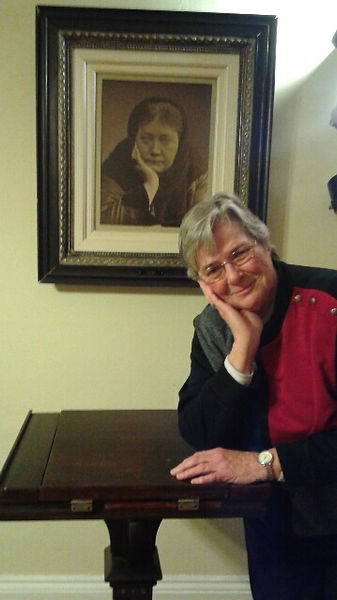
Milwaukee Board President, Kathleen Neuman (2015)


Freedom of Thought
Dorothy Abbenhouse
Dorothy Abbenhouse served as president of the Theosophical Society in America from 1987-1993.
This article appeared in her Viewpoint column in the Fall 1987 issue of The American Theosophist.
The Freedom of Thought resolution adopted by the General Council of the Theosophical Society (Adyar) a half century ago is very clear: Members of the Society are free to think, to believe, to work for any truth they find valid; at the same time each must respect the freedom of all other members to find their own truths.
This statement is both the strength and weakness of this Society. It allows utmost freedom to the members, which permits the expression of nonsense as well as wisdom. It allows the greatest opportunity for members to find within their own nature the ethical systems, the basic statements that express their own experience of truth.
The resolution states that the sole condition of membership in the Society is “approval of its three Objects” and that “No teacher, or writer, from H. P. Blavatsky downwards, has any authority to impose his teachings or opinions on members. Every member has an equal right to attach himself to any school of thought which he may choose, but has no right to force his choice on any other.”
Visiting with groups, I have found that whenever this question of freedom of thought is introduced, beliefs of every kind are expressed. The widest variety of systems of thought, practices, and teachers are offered. There is very little agreement as to doctrine, and often a cry for specific direction.
The Ancient Wisdom, through history, has given us a doctrine broad enough to include everything, but emphasizing a sense of order, relationship, wholeness that can be tested in daily living by every seeker.
The bond of union represents our common search and aspiration for truth: “Truth should be sought by study, by reflection, by purity of life, by devotion to high ideals . . . Truth [is] a prize to be striven for, not . . . a dogma to be imposed by authority” and “belief should be the result of individual study or intuition.”
“Everyone willing to study, to be tolerant, to aim high, and to work perseveringly, is welcomed as a member, and it rests with the member to become a true Theosophist.”
The assumption behind freedom of thought is that the eternal truths will be found through study and work on behalf of the wisdom that is at the center of every religious tradition.


The Theosophical Society in America is a section of the worldwide Theosophical Society, founded in New York in 1875, with its international headquarters at Adyar, Chennai (Madras), India.
The American Section has its national center in Wheaton, Illinois, on a beautiful forty-acre estate called Olcott in honor of the Society’s co-founder and first president, Colonel Henry Steel Olcott.
The Theosophical Society in America
-
Has a Vision of wholeness that inspires a fellowship united in study, meditation, and service.
-
Has a Mission of encouraging open-minded inquiry into world religions, philosophy, science, and the arts in order to understand the wisdom of the ages, respect the unity of all life, and help people explore spiritual self-transformation.
-
Has an Ethic holding that our every action, feeling, and thought affect all other beings and that each of us is capable of and responsible for contributing to the benefit of the whole.